What Factors Affect Lab-Grown Diamond Prices?
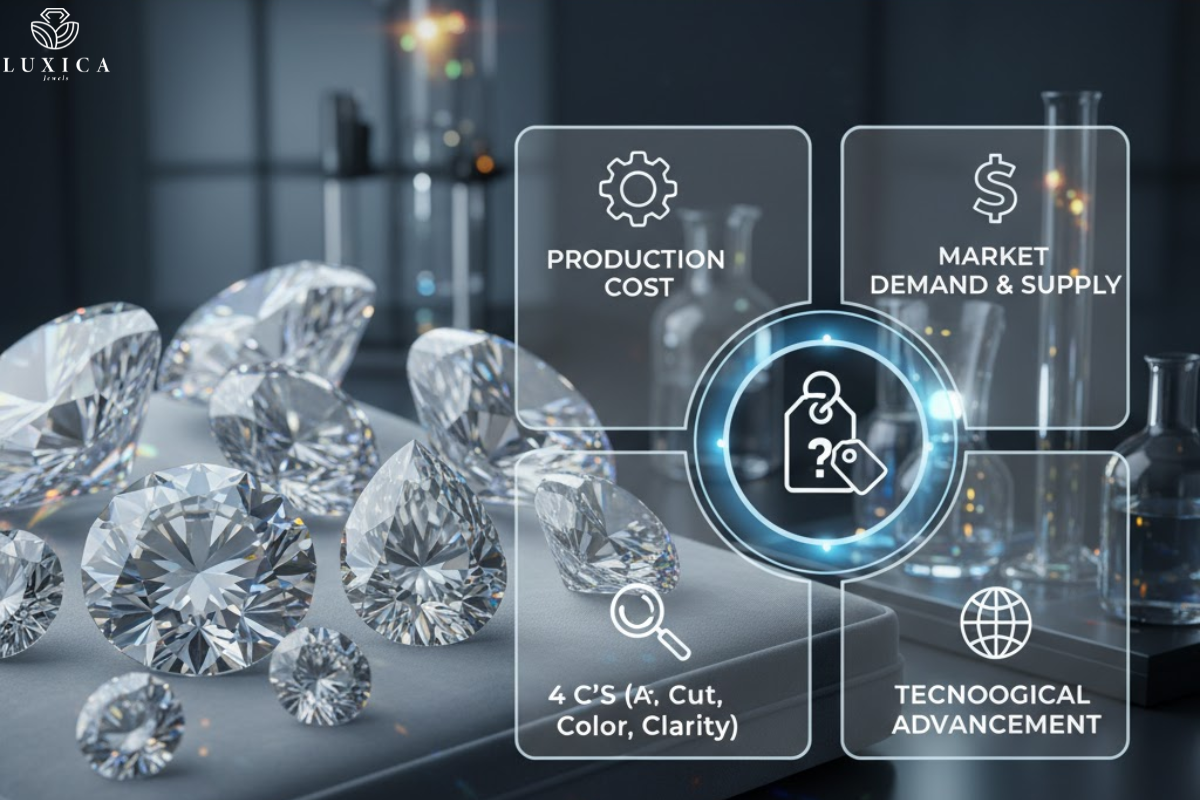
Lab-grown diamonds have completely changed the jewelry market, giving consumers a more ethical and cost-effective choice compared to mined diamonds. But what exactly plays a role in forming their prices? If you are intending to buy a lab-grown diamond, then knowing these factors can guide you to make a wise choice and secure the best value for your investment.
The Four Cs: Your Price Foundation
In the same manner as natural diamonds, lab-grown diamonds are assessed by the well-known Four Cs, which are the main factors influencing their price.
Carat Weight
Carat weight denotes the diameter of the diamond. It would not be surprising that larger diamonds are costlier than smaller ones per carat. One two-carat lab-grown diamond will require a considerable sum of money, whereas its weight equivalence in two one-carat diamonds will be much less; this is because it is harder to get a large stone in a laboratory even if they are controlled.
Cut Quality
The quality of the cut shows how effectively a gem catches light and therefore its sparkle. A diamond that is skilfully cut will yield maximum brilliance and fire hence is more valued. Cut grades are very diverse from Excellent to Poor and the better graded ones are the most expensive. The amount of effort and time that is needed for getting the top cuts is the reason why the cost of production is also high.
Color Grade
Diamonds are assessed according to a color scale that goes from D (colorless) to Z (light yellow or brown). The most valuable and costly diamonds are the colorless (D-F grades) ones. The colorless lab-grown diamonds cost more because they need very accurate control during the process of their growth.
Clarity
The presence of internal inclusions and external blemishes are measured by the clarity of a diamond. Diamonds without any flaws are very rare and expensive, while those with visible inclusions are cheaper. Lab-grown diamonds do reach higher clarity grades more frequently than mined diamonds but even then flawless stones still demand premium prices.
Production Method Matters
There are two primary methods for creating lab-grown diamonds, and each affects pricing differently.
CVD (Chemical Vapor Deposition) uses lower pressure and temperature. This method typically produces high-quality diamonds with excellent clarity but may take longer, affecting the final price.
HPHT (High Pressure High Temperature) mimics the natural diamond formation process more closely. While this method can be faster for certain diamonds, the equipment is expensive to maintain, influencing the cost structure.
Neither method is inherently better, but production efficiency and quality outcomes for specific diamond characteristics can impact pricing.
Market Demand and Supply Dynamics
The price of lab-grown diamonds just like any other product goes up and down according to market conditions. Price has been going generally downward due to better production technology and entry of more manufacturers into the market, but the demand for particular sizes, shapes, or quality grades can bring price differences
Additionally, another factor that influences the market is the consumers. Round brilliant cuts are still the most popular and they might even be slightly more expensive because of the demand, while fancy shapes like pear or marquise might be less expensive or more expensive depending on fashion trends.
Certification and Grading Costs
Reputable diamonds come with certification from recognized gemological laboratories like IGI, GIA, or GCAL. These certificates verify the diamond’s characteristics and authenticity, adding value and a small cost to the final price. Always look for certified lab-grown diamonds to ensure you’re getting what you pay for.
Brand and Retailer Markup
The place where you buy your lab-grown diamond directly affects its price. The established jewelry brands charge more because of their reputation, customer service, and warranties, among others. Online retailers usually provide lower prices as a result of the fact that they have less overhead costs, whereas, boutique jewelers would offer personalized experiences at higher price points.
Current Price Advantages
Diamonds produced in labs are, on average, 60-80% cheaper than the same quality natural diamonds. This huge price difference allows more buyers to access the larger or better quality diamonds. The continuous technological advancements and the resulting drop in production costs are the key factors that will keep
Making Your Purchase Decision
When shopping for lab-grown diamonds, prioritize the Four Cs based on your preferences. Many experts recommend focusing on cut quality first, as it most dramatically affects appearance, then choosing size and color based on your budget and preferences.
Remember that lab-grown diamonds are chemically, physically, and optically identical to mined diamonds. The price difference reflects production methods and market positioning rather than any inherent quality difference.
The Bottom Line
Lab-grown diamond prices are influenced by a complex interplay of quality factors, production methods, market dynamics, and retail choices. By understanding these elements, you can navigate the market confidently and find a beautiful diamond that fits both your style and budget. Whether you choose lab-grown for ethical, environmental, or financial reasons, you’re getting a genuine diamond that will last forever.