Customizing Your Own Lab Diamond Solitaire Ring
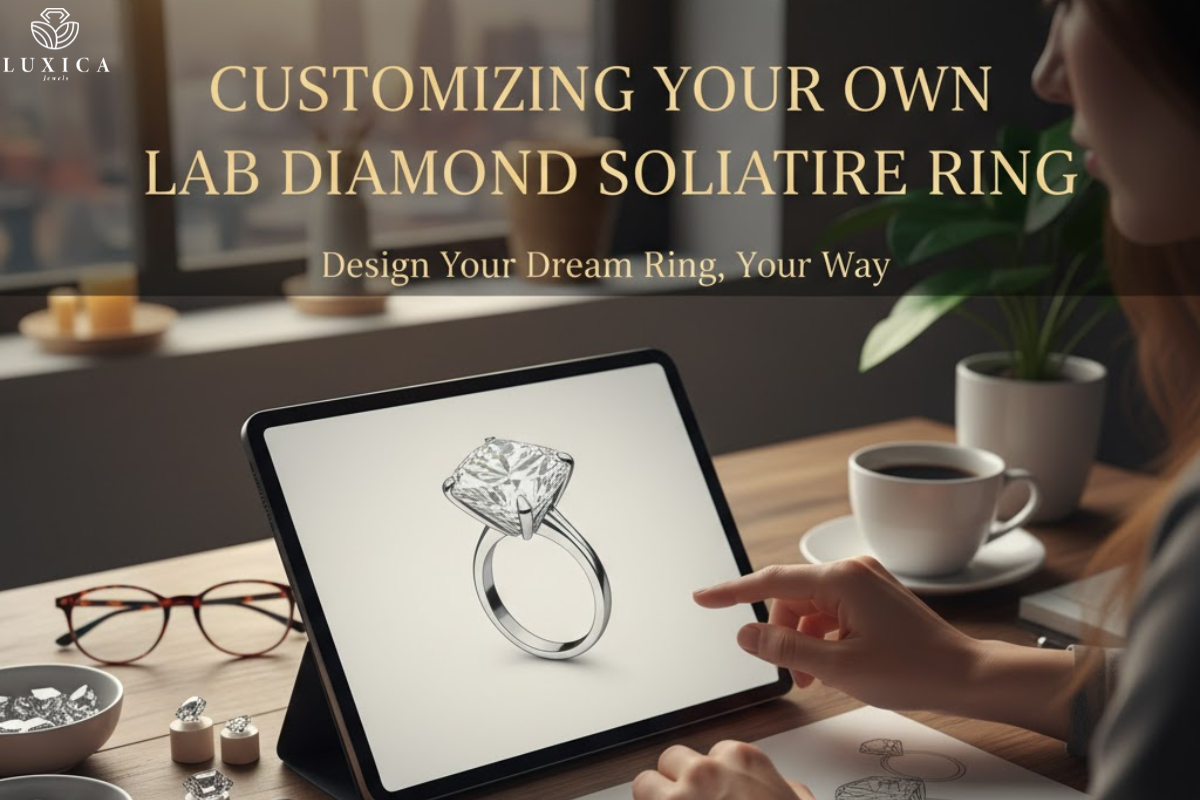
When you create a custom lab diamond solitaire ring, you are actually designing something that expresses your personality and values and is really special. Lab diamonds have the same splendidness and brightness as their mine counterparts, but they also allow you to choose the ethical way and be more flexible with your budget. Here is the entire information you require for your perfect ring.
What Makes Lab Diamonds Special
Lab diamonds are genuine diamonds that are produced in controlled laboratory settings rather than being extracted from the earth. They are identical in terms of physical, chemical, and optical properties to the natural diamonds. The only substantial difference is the manufacturing process, not the identity.
These diamonds usually are sold for a price which is 30 to 40 percent less compared to mined diamonds of similar quality, which means the same price as before you can get a larger or better quality stone. Besides, they are consumer-friendly as no mining operations are involved.
Starting With Your Diamond
The first step in customization is selecting your center stone. You’ll want to consider the four C’s: cut, color, clarity, and carat weight.
Cut is the most critical element for the diamond’s beauty. Excellent or ideal cut diamonds are able to reflect light in the most beautiful way and thus are very bright. Don’t skimp on this aspect if you want to have a lovely ring.
Color grades vary from Z (bright yellow) to D (colorless).. Most people choose diamonds in the D-G range, which appear colorless to the naked eye. Going slightly lower in color grade can save money without noticeably affecting appearance.
Clarity refers to internal imperfections. VS1 or VS2 grades offer excellent value because any flaws are invisible without magnification. You don’t need to pay extra for flawless clarity unless you specifically want it.
Carat weight refers simply to the size. Take into account what your lifestyle and finger size are suited for.
Choosing Your Metal
The metal you select changes the entire look and feel of your ring.
Platinum is the most durable option and has a naturally white color that won’t fade. It’s hypoallergenic and perfect for people with sensitive skin, though it’s the priciest choice.
White gold gives you a similar silvery appearance to platinum at a lower cost. It needs occasional re-plating to maintain its white finish, but many people find the maintenance worthwhile for the savings.
Yellow gold has made a huge comeback in recent years. It offers a warm, classic look that complements all skin tones and never goes out of style.
Rose gold provides a romantic, vintage-inspired appearance with its pinkish hue. It’s become incredibly popular for its unique beauty.
Selecting Your Setting Style
The solitaire setting is timeless for good reason-it showcases your diamond without distraction. But there are different variations to consider.
A prong setting uses four or six metal claws to hold the diamond. This allows maximum light to enter the stone, creating incredible sparkle. Six prongs offer slightly more security.
A bezel setting surrounds the diamond’s edge with a metal rim. This modern style protects the stone and works well for active lifestyles. It gives a sleek, contemporary appearance.
A cathedral setting features arches of metal that elevate the diamond above the band. This adds dimension and elegance to the profile view of your ring.
Personalizing the Details
Little things like this, make your ring absolutely yours. Why not to have it engraved on the inside of the band, for instance, the date, initials, or a meaningful phrase? Others place tiny gemstones inside the band or under the main stone setting.
The band thickness influences the complete appearance. Thin bands (1.5-2mm) give a subtle look, while thick bands (2.5-3mm) produce a loud and assertive look and mostly are more stable.
You can do the same with the gallery-the bottom part of the setting. Some designs have very nice metallic work or small diamonds that increase the interest when viewed from the side and that are not at all obvious at first glance.
Working With Your Jeweler
Locate a jeweler who does custom work and is experienced with lab diamonds. Check their portfolio to be sure their style is what you want.
From the start, be transparent about your budget. Luxica Jewels is best choice you can choose for your customize ring.
Before your ring is made, request that CAD (computer-aided design) renderings be shown to you. This allows you to see the end product and if necessary, make adjustments. Nowadays most custom jewelers are equipped with this technology as a standard.
Obtain a written document for everything, including the diamond particulars, metal type and weight, schedule, and the total amount. This is a sure way of protecting both you and the jeweler.
Making the Final Decision
Do not hasten your choice. This is a ring that you will be wearing every day; therefore, it must be right. Do not let the outside pressure push you into a decision that you are not excited about.
Take into consideration your way of living. If you are working with your hands or if you are leading an active life, then you should place more emphasis on durability. If you are more into fashion, then you can opt for a design that highlights the stylistic aspect.
Trust your instincts. When you see the right combination of diamond, metal, and setting, you’ll know. That feeling of “this is it” matters more than following trends or rules.
The Beauty of Customization
Creating a custom lab diamond solitaire ring means you’re not settling for something off the shelf. Every element is chosen specifically for you, resulting in a ring that tells your story. The process itself becomes part of your journey, and the finished piece will be something you treasure forever.
Lab diamonds make this dream more accessible than ever before, offering exceptional quality and beauty while supporting your values. Your perfect ring is waiting to be designed-all it needs is your vision to bring it to life.