Asscher Cut Lab Grown Diamonds: Buying Tips
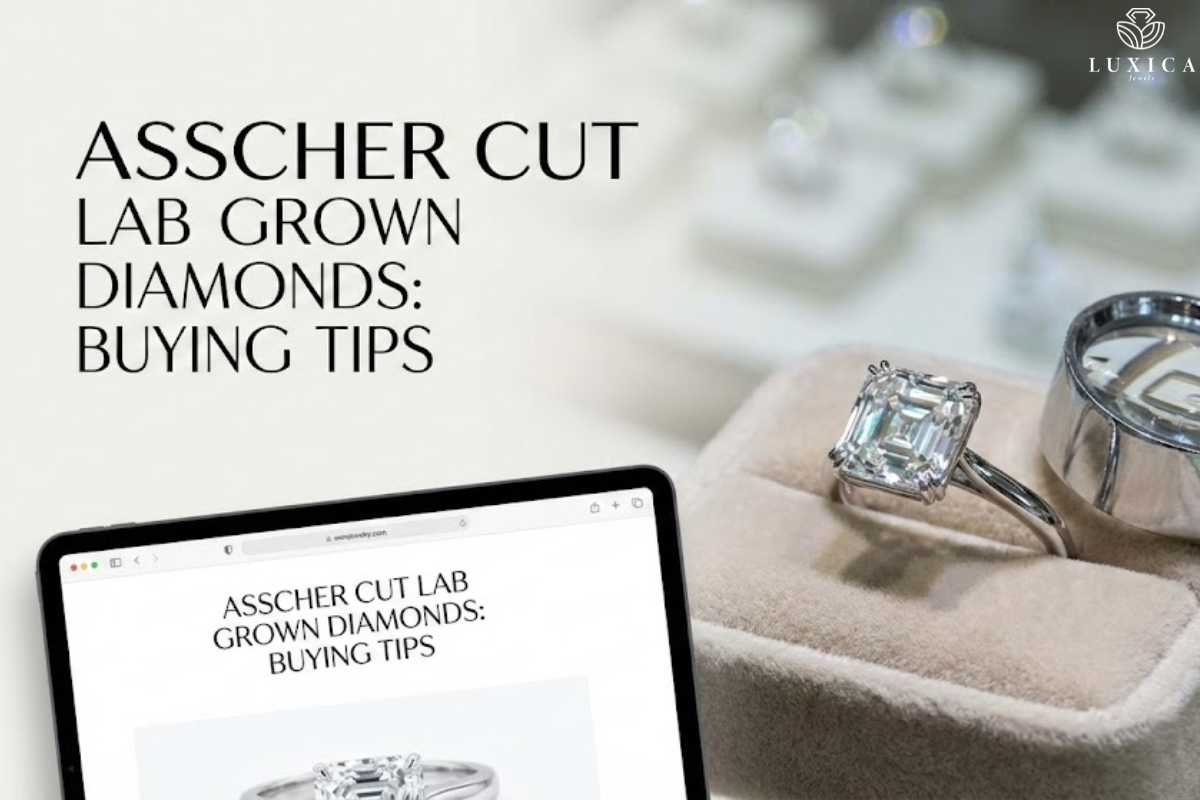
The Asscher cut diamond is an ageless selection that effectively fuses antique charm with contemporary style. The Asscher brothers of Holland invented this diamond in 1902, giving it a square shape with rounded corners and a unique step-cut pattern that produces a captivating “hall of mirrors” effect.
By opting for an Asscher cut diamond made in a lab, you are not only smart but also showing love to the planet. Artificial diamonds are the same as natural ones in every aspect but their price, which is 30-40% less than the price of mined diamonds, hence you are able to buy a jewel of the best quality. Here’s what to know to get a perfect purchase.
Prioritize Cut Quality Above All
The cut is the most important aspect for Asscher diamonds. Where brilliant cuts manage to cover flaws by their shimmer, the step-cut faceting of Asscher diamonds is extremely clear, revealing all the details that are in the stone.
Select diamonds that are either of an Excellent or Very Good cut grade. The longer the width ratio should be 1.00 for a perfectly square look up to 1.05 for a slightly rectangular look. Examine the grades of symmetry and polish, which affect light and determine how well the diamond is cut. A perfect Asscher will be very bright and exhibit the typical windmill pattern when viewed from above.
Choose Higher Clarity Grades
The transparent characteristics of the Asscher cuts have increased their clarity value compared to other shapes. The huge, open facets are like the diamond’s windows, hence inclusions are easily seen.
We recommend that you choose lab grown diamonds of the Asscher cut with a clarity grade of VS2 or higher. If your budget allows, VS1 or VVS2 grades will ensure your diamond is not detectable even to the trained eye as being less than perfect. Do not attempt to negotiate clarity with this cut-it’s one section where putting out more money results in a lot of improvement in appearance.
Select the Right Color
The cutting technique of step-cut makes diamonds of the Asscher type more transparent. In contrast to the brilliant cuts dispersing the light thus hiding the color, the Asscher cut, with its large facets, displays the color very well.
The color grading of H or higher should be chosen. If the diamond was placed in white gold or platinum, the G color would be a good choice or even better so as to achieve the colorless effect on the stone. One of the many advantages of lab-grown diamonds is the reasonable price which permits one to go for the upper color grades unlike in the case of mined diamonds.
Get Proper Certification
Certification from a well-known laboratory is a must when purchasing a diamond. Try to find the ones from IGI (International Gemological Institute), GIA (Gemological Institute of America), or GCAL.
Getting a certificate implies that there is an independent assessment of your diamond along with an assurance of its quality. Choose lab grown diamonds of the Asscher cut with a clarity grade of VS2 or higher.
Understand Size Considerations
Asscher diamonds look smaller than round diamonds of the same weight as the latter’s weight is distributed more in surface area than in depth. If the size is an important factor for you, you may want to increase the weight of your stone by 0.25 – 0.50 carats to get the desired size effect.
Still, let quality stay ahead of quantity. A small Asscher diamond with first-class cutting quality will always be brighter than large diamond with low cutting quality.
Examine the Corners
The corners that were cut off in the Asscher shape must be absolutely even and well-angled on each one of the four sides. Misaligned or insufficiently cut corners will have a great negative impact on the diamond’s overall appeal and beauty. Make sure all corners have the same size and shape, and they are all free from chips and other defects.
Choose the Right Setting
Asscher cuts pair beautifully with settings that complement their Art Deco heritage. Solitaire settings showcase the diamond’s geometric beauty, while halo settings enhance the vintage aesthetic. Three-stone settings create elegant, balanced designs perfect for engagement rings.
Consider your metal choice carefully. Platinum and white gold emphasize the diamond’s clarity, while yellow gold creates a warm vintage look. Ensure your setting provides adequate protection for the vulnerable corners.
Buy from Reputable Sellers
Luxica Jewels is best choice you can make to buy your lab grown diamond jewelry. Get your diamonds from jewelers who have straightforward return policies, lifetime warranties, and fair pricing. Read customer reviews and inquire about the diamond’s place of origin, certification particulars, and guarantees.
Before buying, ask for detailed pictures or videos and, if possible, check out the diamond in real life to make sure it matches your expectations.
Common Mistakes to Avoid
Do not confine yourself to the carat size only while cutting quality and clarity are still being neglected. An uncertified diamond should not be bought under any circumstance. Do not compromise on cut quality just to save money-the Asscher cut is all about cut determining the diamond’s beauty.
When comparing prices, do it among not just one but many different sellers as lab grown diamond prices differ a lot. Also, be sure to include the setting in your budget and not just the diamond.
Making Your Decision
Purchasing an Asscher cut lab grown diamond brings together the practical side as well as the personal preferences. Determine the cut quality first then pick the clarity and color grades that are appropriate, get the right certification, and finally buy from trustworthy sellers.
Don’t rush during the selection process. A diamond is a piece of jewelry that holds a significant personal and emotional value. Hence, it is always great when you can find what you really want. The classic beauty of the Asscher cut along with the ethical and economical character of lab grown diamonds provides a chance to own truly breathtaking jewelry that will be cherished for a lifetime.